Introduction
The present use case addresses a classical benchmark problem in Computational Structural Mechanics (CSM), namely the simulation of a beam structure fixed at one end and loaded by a shear force at the other end (see Fig. 1). This type of problem is widely used in the literature as a reference for evaluating the accuracy and robustness of numerical methods in CSM.
The benchmark considered here was originally reported by Sze et al. 2004, who compiled a comprehensive set of non-linear test cases for shell Finite-Element (FE) analysis. In their work, the reference solution (summarized in Tab. 1) for this specific problem was obtained using the commercial FE solver Abaqus, relying on the S4R four-node shell elements with reduced integration and hourglass control.
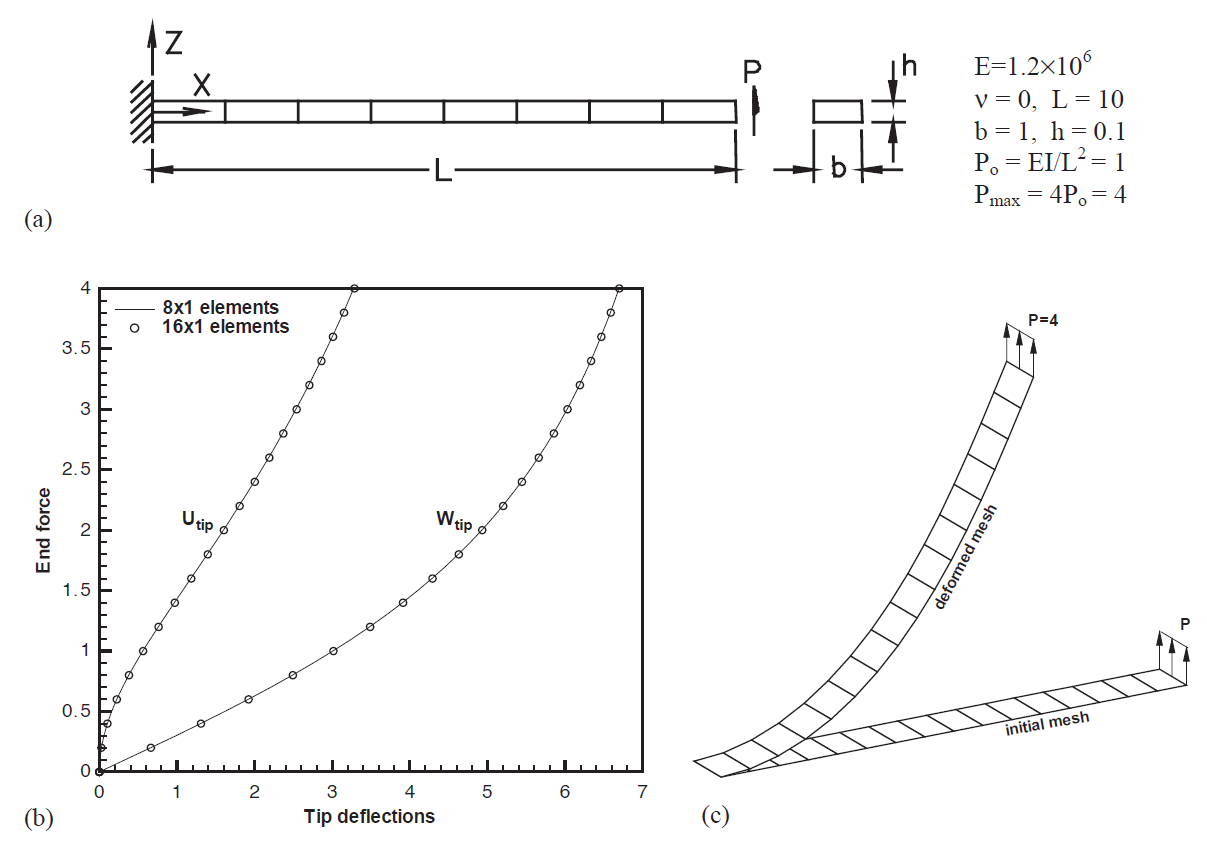
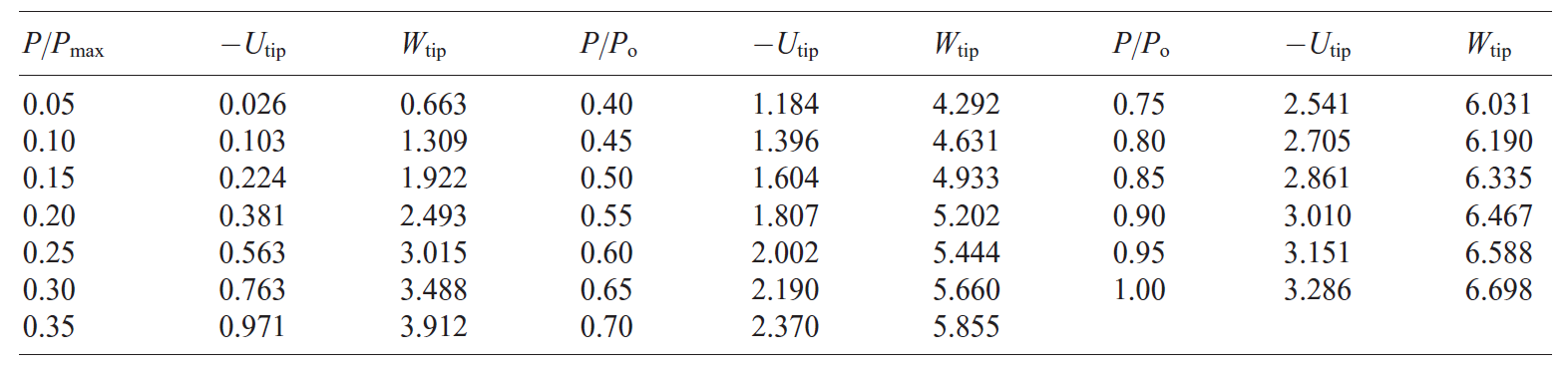
This test case is particularly interesting because it exhibits non-linear elastic behavior, which provides a meaningful challenge for numerical methods. Additionally, the simple geometric shape of the structure allows for different modeling approaches: fully resolved 3D solid elements, 2D shell elements, or simplified 1D beam elements. Each approach introduces different levels of approximation and computational cost, offering a clear perspective on the trade-offs inherent in structural modeling.
The main objective of this use case is therefore to simulate the benchmark problem using three different modeling strategies [3D solid elements | 2D shell elements | 1D beam elements] within the nuRemics framework, and to compare their respective capabilities in capturing the non-linear response of the structure.

Importantly, this study is performed in application of the ASME V&V40 standard (V&V40) (see Fig. 2), which provides guidance for the development of Computational Modeling & Simulation (CM&S) technologies, ensuring their credibility and reliability through rigorous Verification & Validation (V&V) activities. The standard establishes a structured framework to guarantee that CM&S methods meet the highest standards of safety and effectiveness, particularly in the context of Medical Device (MD) development. By adhering to the V&V40, this use case not only serves as a benchmark for numerical accuracy but also demonstrates how nuRemics can be applied within a scientifically rigorous and regulatory-aware workflow.
It is nonetheless important to note that this methodology could be broadened to contexts beyond MD, making the V&V40 framework relevant for a wide range of industrial applications where the V&V of computational models is critical for design, safety, and performance assessment.
In the present use case, the benchmark problem is employed to establish the credibility factor associated with Numerical Code Verification (NCV). The objective of NCV is to demonstrate the correct implementation and functioning of the numerical algorithms within the CM&S framework. This involves a careful investigation of key numerical aspects, including spatial and temporal convergence rates, independence from coordinate transformations, and symmetry tests under various system conditions.
NCV is typically conducted by comparing numerical solutions to exact benchmark solutions, which may be analytical or semi-analytical, or generated using techniques such as the methods of manufactured solutions. In this use case, the cantilever beam benchmark provides such a reference solution, enabling a rigorous assessment of the numerical fidelity of the nuRemics CM&S software system across multiple modeling strategies (3D solids, 2D shells, and 1D beams).